The second part of the Urtel flag.
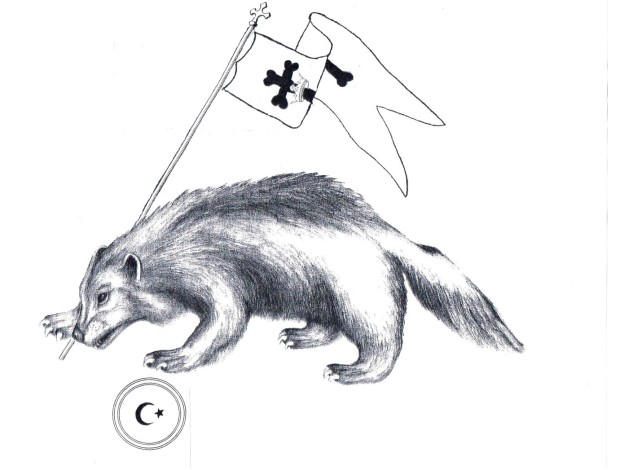
The second Woe or curse prophesied in Revelation 9:13-19, namely, the Islamic armies prophesied by God, is represented here in the circle by the crescent and star. “During a siege by Philip of Macedon (B.C. 340), a light suddenly appeared one night, enabling the Athenian garrison to see and thwart an intended assault by the besiegers. In commemoration of this event, a crescent appears on some Byzantine coins, and to this is usually attributed the origin of the crescent, the emblem of the Turkish empire, adopted immediately after the conquest of Constantinople.”